Privacy Design
The referral token contains zero client PII. Only operational data is stored: household size, population type, urgency, special needs, and the worker's callback number. The shelter address is shared verbally during a phone call, never through this system. All tokens are hard-deleted within 24 hours.
Outreach Worker: Request a Referral
-
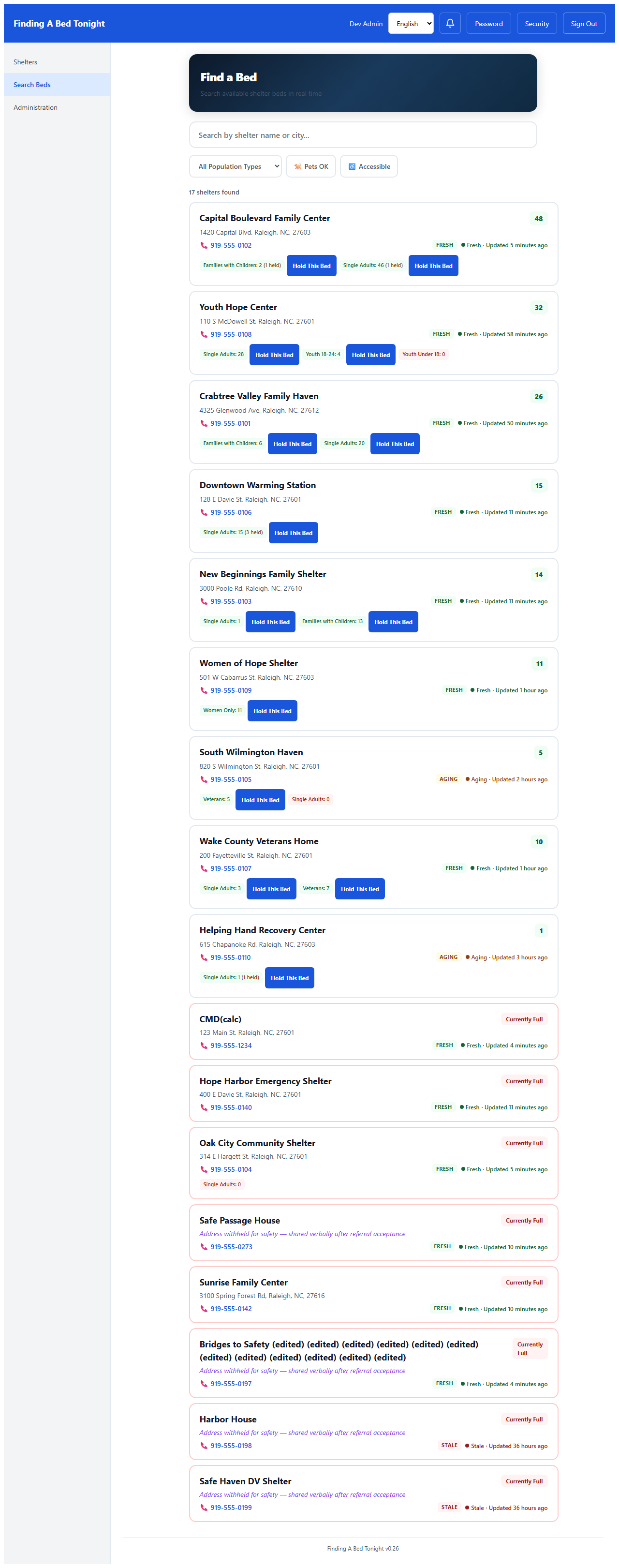
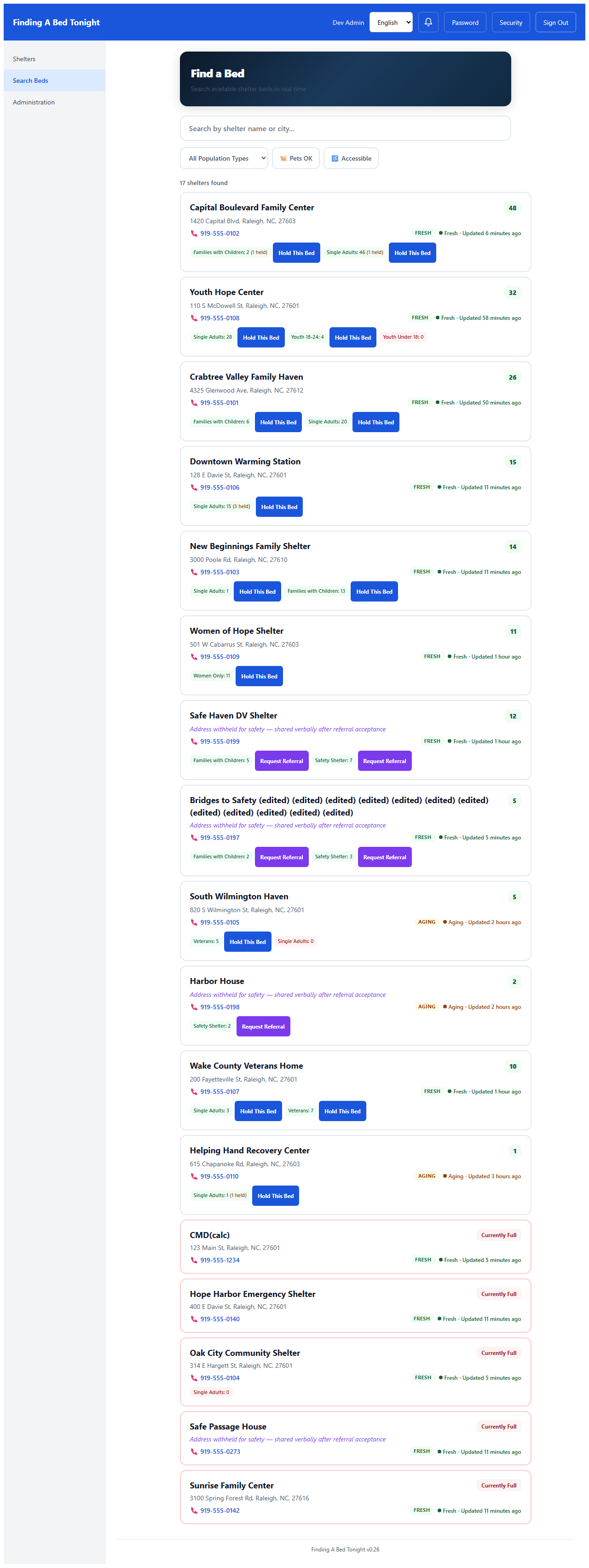
1 DV Shelter in Search Results Outreach WorkerA woman and her two children need a safe place tonight. Darius searches for beds — and because he has DV authorization, safety shelters appear in his results. Instead of "Hold This Bed," a purple "Request Referral" button appears. He doesn't know the shelter's address. That's by design.
-
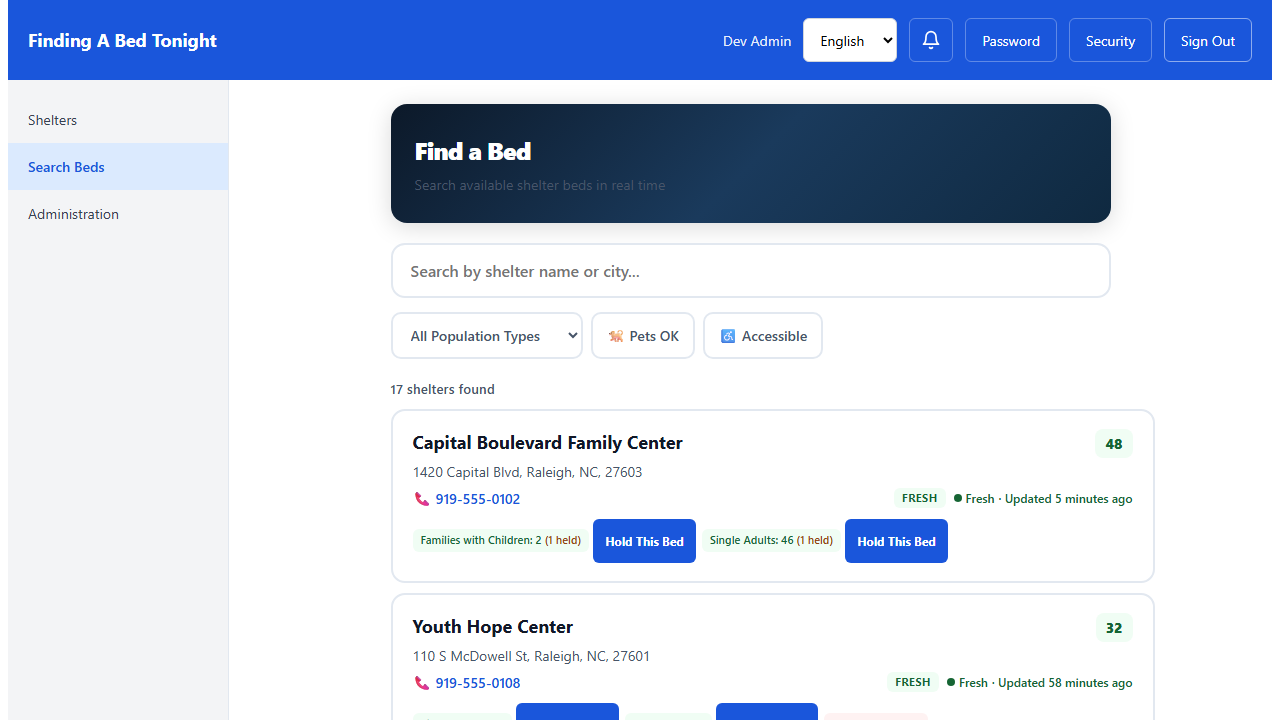
2 Referral Request Form Outreach WorkerDarius fills in only what the shelter needs to make a decision — household size, urgency, special needs. No names. No addresses. No client PII enters the system at any point.
-
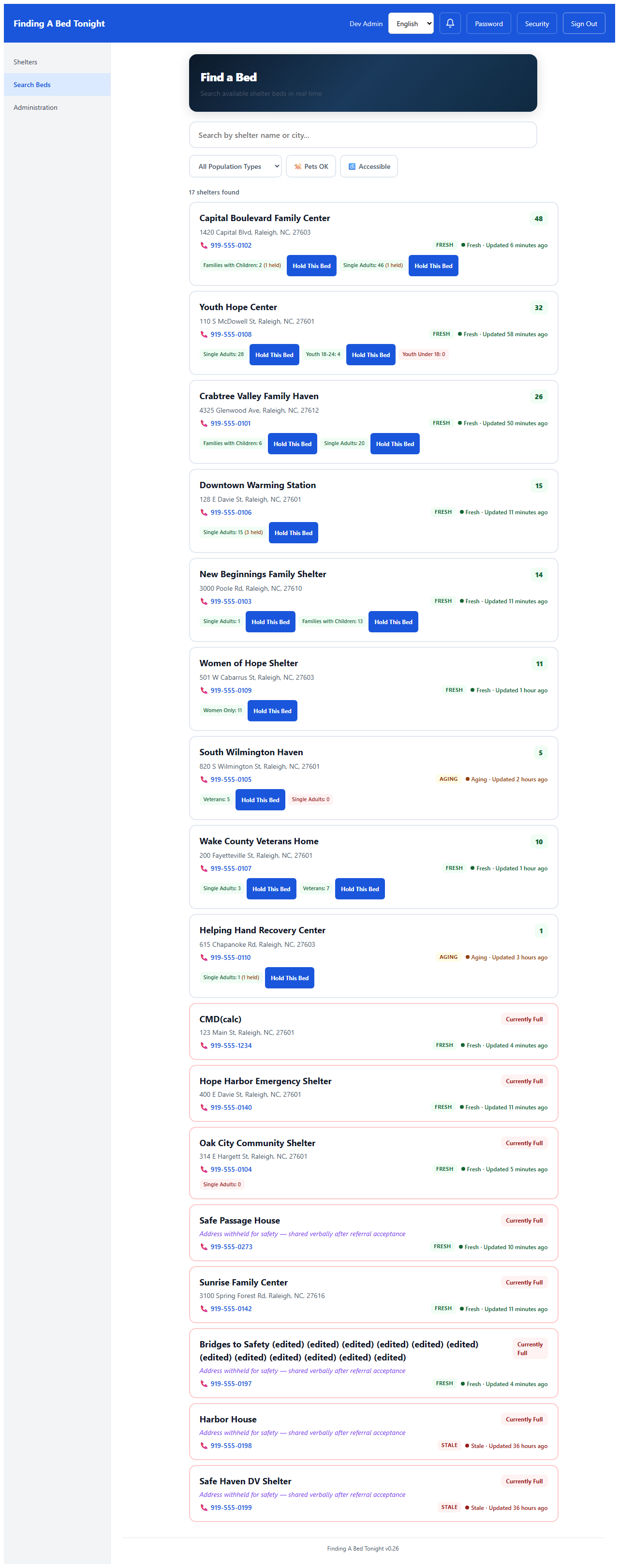
3 Pending Referral — Waiting for Response Outreach WorkerThe referral is submitted. Now Darius waits — a countdown timer shows how long the shelter has to respond. He stays with the family.
DV Shelter Staff: Screen & Respond
-
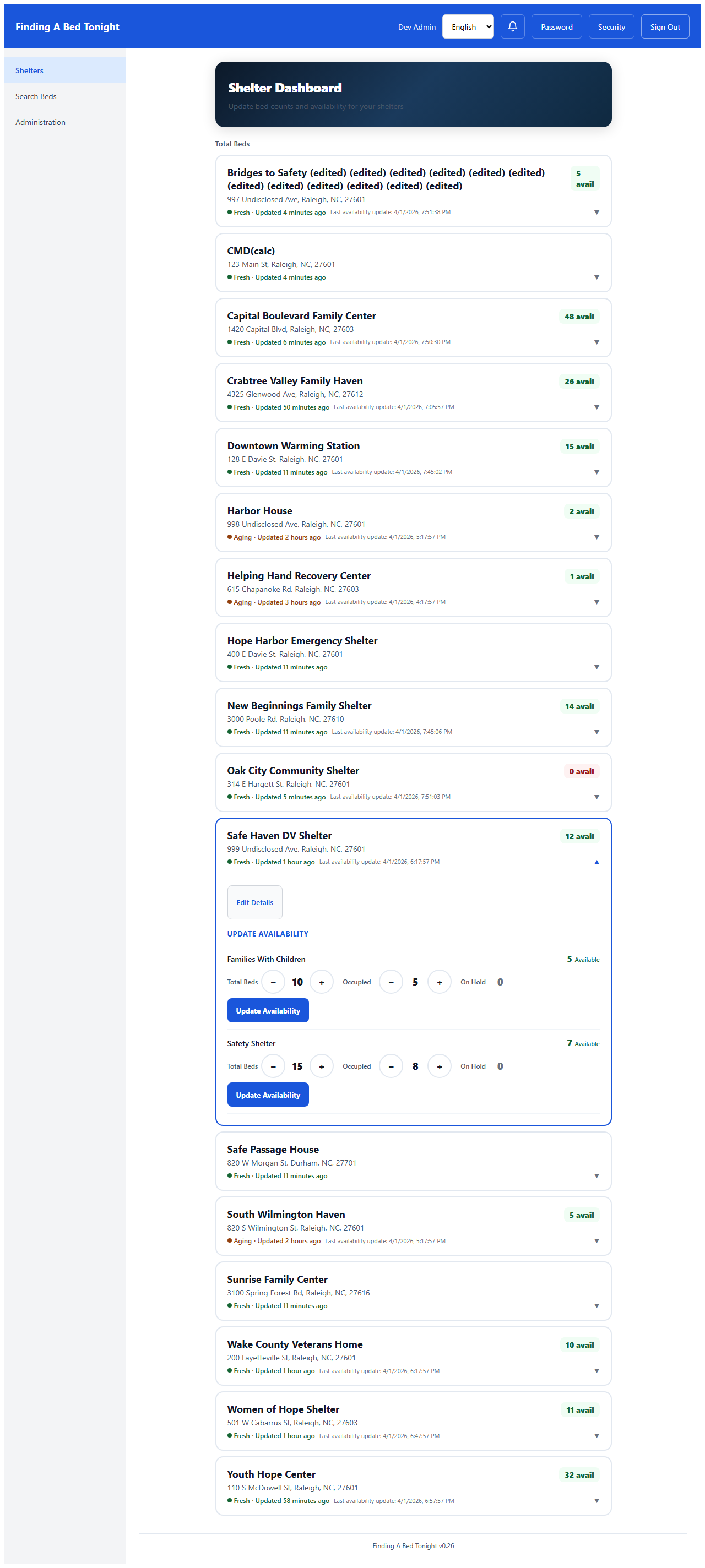
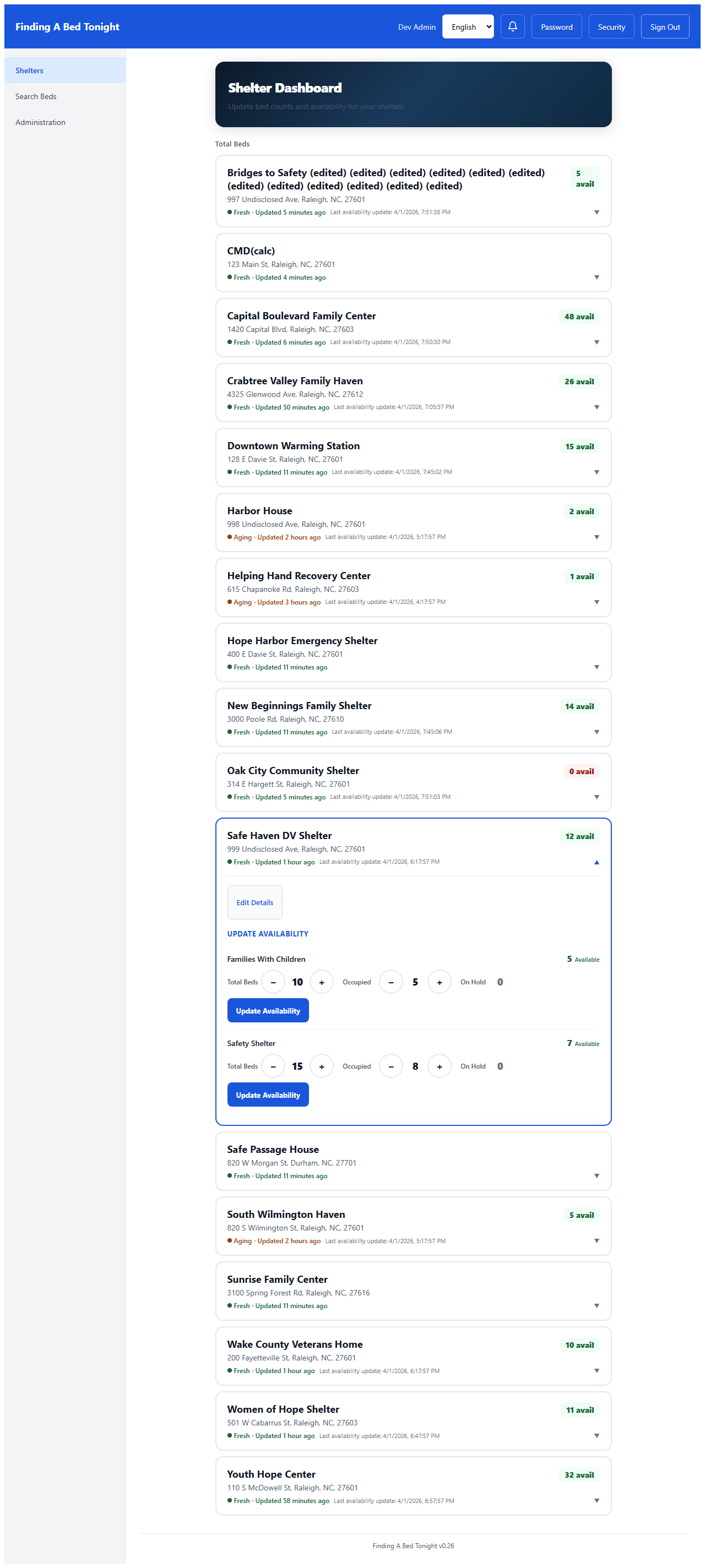
4 Safety Screening View DV CoordinatorAt the shelter, the coordinator sees the referral come in — household size, urgency, special needs. No names, no faces. She reviews what she needs to make a safe decision: can we serve this family tonight?
-
5 Referral Accepted — Begin Warm Handoff DV CoordinatorShe accepts. Darius's notification bell lights up instantly — the referral status changes to Accepted and the shelter's intake phone number appears — but still not the address. That comes next, voice to voice.
-
6 Warm Handoff — Worker Sees Phone Number Outreach WorkerDarius calls the shelter intake line. The coordinator gives the address over the phone — the warm handoff. The address never appeared on a screen, never hit a database, never left a digital trace.
Rejection Flow
-
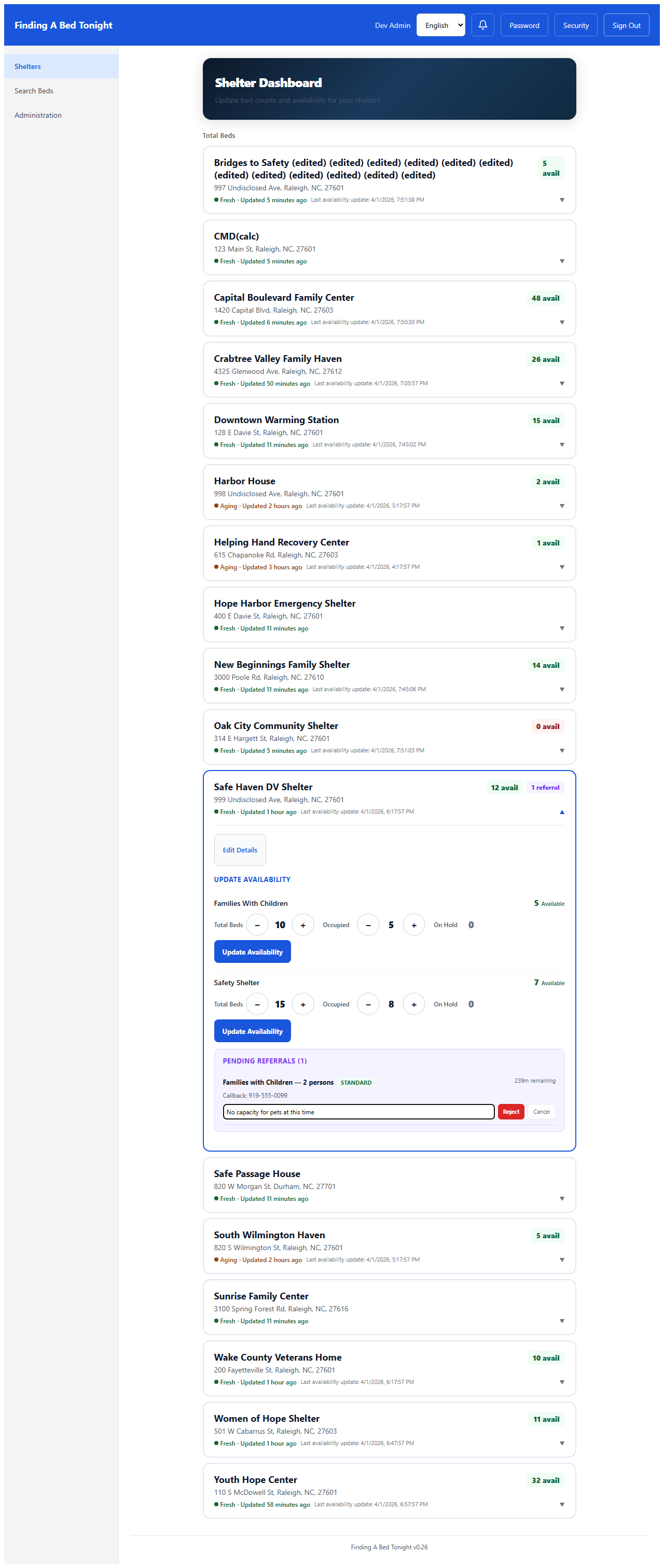
7 Referral Rejected with Reason DV CoordinatorSometimes the answer is no — "No capacity for pets at this time." The coordinator explains why without revealing anything about the client. Darius sees the reason and can request a referral to a different shelter immediately.
What Happens After
All referral tokens — accepted, rejected, or expired — are hard-deleted within 24 hours by the purge service. No audit trail of individual referrals survives in the database. Only aggregate Micrometer counters (requested/accepted/rejected/expired) remain for HUD reporting, backed by Prometheus when the observability stack is active.